Chonker & Chonker Playground
In production, internalChonker is a Python library for structured document extraction, paired with a full-stack configuration application. The internal product moves extraction setup from code to an interface and prevents repeated implementation across client engagements.
Why I built it
Consulting engagements repeatedly require structured data extraction from large collections of PDFs. Client schemas and document formats vary, but each engagement requires similar chunking, extraction, and parsing logic.
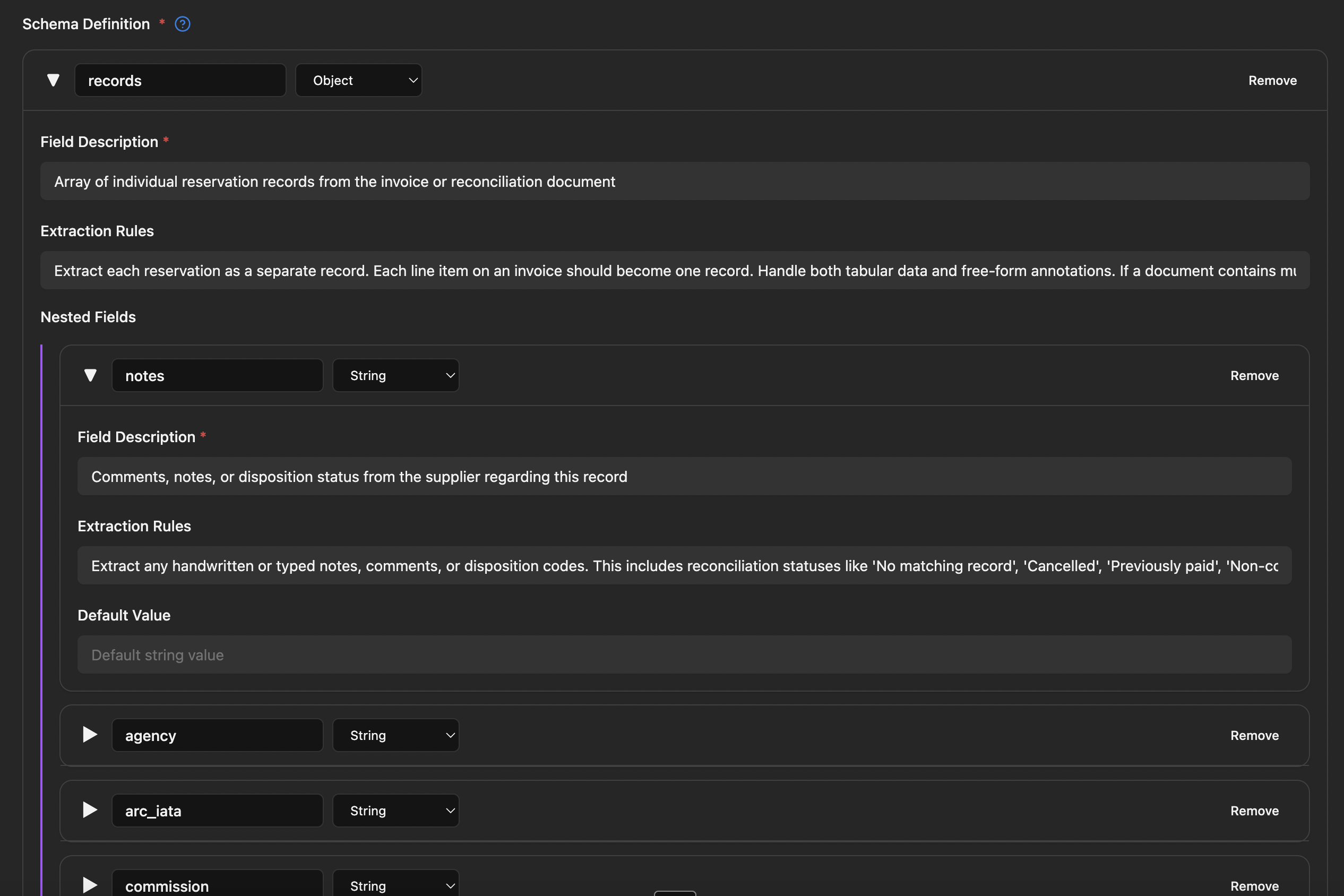
I wanted to avoid rebuilding extraction systems for every client engagement. Chonker began as an internal Python library for chunking, extraction, and parsing. The library accepts a 2-page or 2,000-page PDF and a chonker.config JSON file describing the required fields, then returns structured output. Each field defines a name, description, default value, and applicable extraction rules.
Chonker eliminated repeated extraction logic, but configuration authoring remained slow. Nested schemas and complex extraction rules require careful implementation and validation. Chonker Playground provides a visual interface for the configuration process.
Chonker Playground
Chonker Playground is a FastAPI server using the Chonker library with a React frontend. Team members can create, test, and deploy extraction use cases without writing code.
The workflow includes the following steps:
- Create a project and an extraction use case. Each use case maps to an extraction configuration.
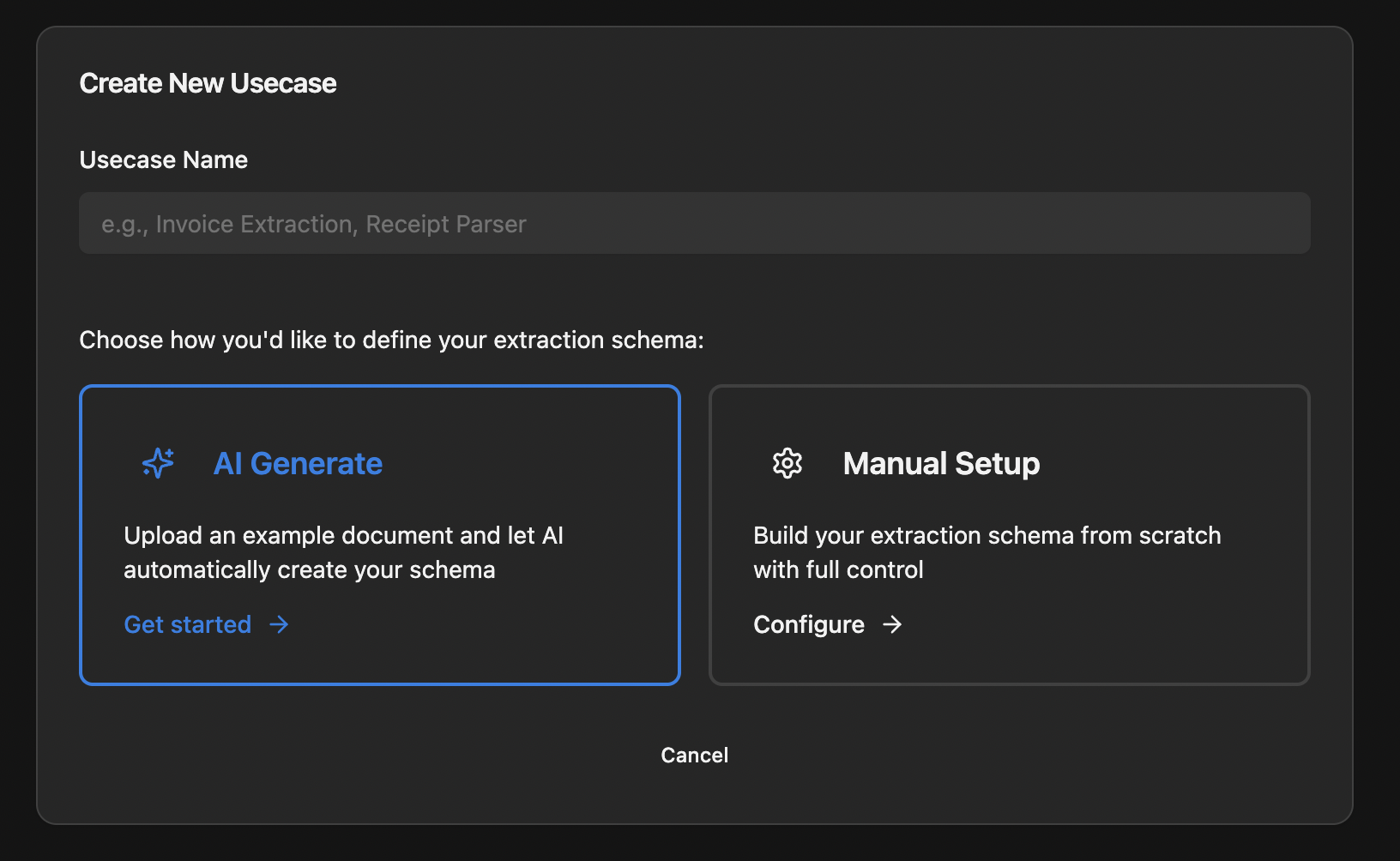
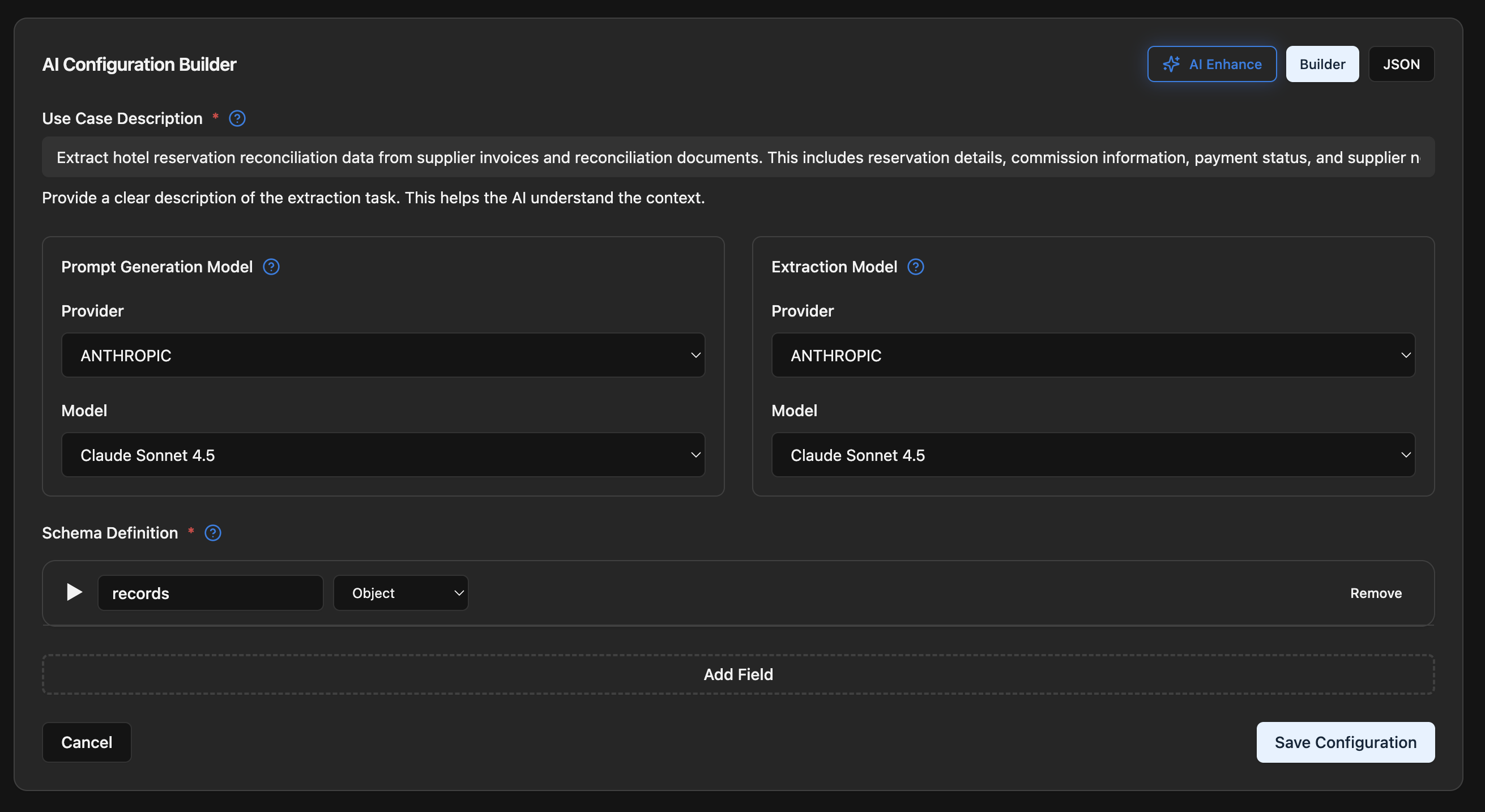
- Paste Read.ai notes from a client meeting. An AI assistant generates an initial configuration from the notes.
- Edit the configuration through a form interface. Nested objects, field rules, and defaults remain editable without manual JSON changes.
- Upload sample files through the browser to test extraction and review results immediately.
- Deploy the configuration in a project codebase or generate API keys for direct Chonker Playground access. Chonker Playground can serve as the extraction backend.
- Share projects with team members for collaborative extraction development.
Company SSO restricts access to company email accounts. The application runs on internal AWS infrastructure.
Pre-sale impact
The most significant impact is pre-sale support rather than delivery speed. Consulting requires solution architecture for prospective clients, often involving difficult documents and short feasibility assessments.
Before Chonker Playground, assessing client data extractability required project scaffolding, custom code, and up to two days of work before a confident recommendation.
The current process starts with meeting notes, an AI-drafted configuration, and sample client files. Less than five minutes produces a clear assessment of data extractability and required custom development.
Some engagements require no custom extraction system beyond Chonker Playground.
Chonker Playground has reduced internal estimation time for extraction projects by 50%.
Technical design
- Provider-independent model access through an approach also used by Neuromod and Golem.
- Two independently configurable stages: prompt assembly from the extraction configuration and model-driven extraction from the prompts and source document. Claude Sonnet 4.6 can assemble prompts while Gemini 3.0 performs extraction when the model combination produces stronger results for an extraction use case.
- Document-size-independent chunking, processing a 2,000-page PDF through the code path used for a 2-page PDF.
- An extraction configuration schema serving as the interface contract for the Playground, AI-assisted configuration generation, and API layer.
- AI-assisted configuration generation enabling non-specialists to turn meeting notes into an initial extraction configuration, then refine the configuration in an interface.
Stack
Python and FastAPI power the library and server. React powers the Chonker Playground frontend. Multi-provider LLM access supports model selection. Internal AWS hosting and company SSO protect the application.